9/20/2006

Doing Good Through Social Entrepreneurship

Ashoka.org announces a new website that reflects its culture of innovation. The new site provides:

Easily navigable fellow profiles and increased search functionality
New information on Ashoka programs
Interactive maps to locate country information
A pressroom with the latest Ashoka news highlights and archives
Improved options for donor contributions
A comprehensive resource center on social entrepreneurship

"Ashoka is the global association of the world’s leading social entrepreneurs—men and women with system changing solutions for the world’s most urgent social problems. Since 1981, Ashoka has elected over 1,800 leading social entrepreneurs as Ashoka Fellows, providing them with living stipends, professional support, and access to a global network of peers in more than 60 countries.

Ashoka Fellows inspire others to adopt and spread their innovations—demonstrating to all citizens that they too have the potential to be powerful changemakers and make a positive difference in their communities.

By unleashing the same innovative and entrepreneurial mindset which has driven business sector growth over the last two centuries, Ashoka is leading a dramatic transformation in society, fueling the citizen sector’s unprecedented growth. With our global community of social entrepreneurs, Ashoka develops models for collaboration and designs infrastructure needed for this growth."

Technorati Tags: , , , ,

9/17/2006

Big Ideas in the Big Moo

From this Seth Godin post

"Griffin does a nice job of summarizing some of the big ideas in the Big Moo:

1. Real security comes from growth ( Page xiv ) To me this is the best statement in the book and it's right there in the preface.

2. Wanting growth and attaining growth are two different things ( Preface xv ) - Companies usually end up paralyzed by trying to focus on how they'll grow instead of actually growing.

3. Those who fit in now won't stand out later ( Page 5 ) - It's difficult to change once you get into a rhythm of mediocrity.

4. If you name something, you get power over it ( Page 18 ) - Ever try to change a bad nickname ? When a name catches on, it becomes very powerful.

5. Don't concentrate on making a standard. Once you create the standard, you've created a commodity and your customers will seek something like it, but cheaper ( Page 23 ) - *cough* Netscape *cough*

6. Being efficient is not as good as being robust ( Page 52 ) - There's such a thing as "good enough". Being flexible is better than trying to squeeze out a few extra performance cycles.

7. You can't predict the future ( Page 55 ) - ...

8. Everything is version .9, waiting for just one more upgrade before it's done ( Page 86 ) - Releasing something stable, but not complete is better than waiting it's "perfect". It will never be perfect.

9. Betting on change is always the safest bet ( Page 91 ) - You can't constrain change. People have scars from trying to.

10. Creativity is made up of iteration and juxtaposition ( Page 95 ) - Mash things together enough times, and something interesting will happen.

11. Compromise kills. Doing something half-ass is worse than doing nothing ( Page 97 ) - If you don't have enough information to implement something, ignore it and move on. It's better than trying to guess. Remember #7.

12. Novelty for the sake of novelty is risky and a recipe for irrelevance ( Page 100 ) - Solve a problem. I've written about this ...

13. The energy isn't in the idea, it's in the execution ( Page 101 ) - Everyone wants to sit around and think up cool stuff. Sooner or later, you're going to have to actually build something.

14. A product is what the customer thinks it is ( Page 131 ) - How many times have you gotten pissed at a user of your software for "using it wrong" ?

15. Don't let the seeds stop you from enjoying the watermelon ( Page 134 ) - The world is grey. Every solution, product, feature is the result of several trade-offs.

Technorati Tags: , , , ,

9/06/2006

Be an Authentic Leader

The following articles from BNET.com (with BNET's commentary) explain how to develop a more direct, authentic style of leadership as well as the obstacles you'll face along the way.

Gaining An Edge: Authentic Leadership Lessons
Authentic leadership is leadership that can be trusted; leadership that is, in fact, as it is represented. In the business environment, authentic leadership is a fundamental requirement for generating peak performance. Some companies can make money, even in the absence of authentic leadership, but they can't come close to realizing their full potential without it. The characteristics of an authentic organization are: a guiding vision, a value-driven organization, a powerful focus for delivering work, and respecting people by expecting their best.

Lessons in Authentic Leadership
Vision, organizational thinking, and the ability to deftly act on strategic intent are the critical elements needed to sustain a competitive advantage in today's marketplace. Assumptions, operating principles and worldviews are strikingly dissimilar across the several generations in today's workforce. Leadership, going forward, is not as much about telling as it is about hearing; not as much about knowing as it is about facilitating dialogue and inquiry; not as much about being in charge as it is about enabling the necessary capabilities and outcomes. This paper explores how authentic listening serves as an indispensable tool for leaders at all levels.

Mindfulness, Hope and Compassion: A Leader's Road Map to Renewal
How does a leader quell the everyday, inner conflicts caused by the heavy responsibility, the need for constant self-control and the inevitable crises - and still remain an effective leader? Not easily. These authors have excellent suggestions for calming and resolving that turmoil and for going beyond to remain an effective, highly resonant leader.

Becoming An Authentic Leader
Authentic leaders genuinely desire to serve others through their leadership. They are more interested in empowering the people they lead to make a difference than they are in power or prestige. They are as guided by qualities of the heart, by passion and compassion, as they are by qualities of the mind. The paper examines some characteristics of authentic leaders.

Rethinking Leadership Thinking: Choosing a More Authentic Path
Today, for the first time, leaders may find that authentic leadership and inspired teams are prerequisites to organizational survival. A rapidly changing world demands speed, flexibility, and responsiveness. Past systems of command and control, strict hierarchical structures, and dictated actions are inadequate to the task. To become a more effective leader of an inspired team, you have to unlearn many past practices, create a compelling value proposition for change and build a process that helps to anticipate and deal with resistance.

Technorati Tags: , , , ,

9/04/2006

FAQ on Starting a Solo Business

While there are hundreds of questions running through the mind of a solo entrepreneur at any given time, this this article from workingsolo.com does a good job of addressing these:

1. How can I tell if I've got what it takes to be a solo entrepreneur?
2. What are the most important things to do before a would-be entrepreneur he or she quits a day job?
3. What are the biggest challenges to starting a business?
4. How do you determine what kind of business is best for you?
5. What are the biggest mistakes new business owners make?
6. How much start-up capital does a typical small business need?
7. Are there any financial or tax advantages to starting a small business?
8. What are the best ways for a small business to obtain start-up capital?
9. What's the best way for someone to price their product or service?
10. What are the most important things entrepreneurs need to do to turn their small business into a success?

Technorati Tags: , , , ,

8/31/2006

Resources on Business Models

This Wikipedia entry explains that:

"A business model describes a company's:

value propositions: The company's offers which bundle products and services into value for the customer. A value proposition creates utility for the customer.

target customer segments: The customer segments a company wants to offer value to. This describes the groups of people with common characteristics for which the company creates value. The process of defining customer segments is referred to as market segmentation.

distribution channels: The various means of the company to get in touch with its customers. This describes how a company goes to market. It refers to the company's marketing and distribution strategy.

customer relationships: The links a company establishes between itself and its different customer segments. The process of managing customer relationships is referred to as customer relationship management.

value configurations: The configuration of activities and resources.

core capabilities: The capabilities and competencies necessary to execute the company's business model.

partner network: The network of cooperative agreements with other companies necessary to efficiently offer and commercialize value. This describes the company's range of business alliances.

cost structure: The monetary consequences of the means employed in the business model.

revenue model: The way a company makes money through a variety of revenue flows.

The process of business model design is part of business strategy. The implementation of a company's business model into organizational structures (e.g. organigrams, workflows, human resources) and systems (e.g. Information Technology architecture, production lines) is part of a company's business operations."

This Particletree post provides links to additional resources on business models, including:

"the “Freemium” Plan - Give your service away for free, possibly ad supported but maybe not, acquire a lot of customers very efficiently through word of mouth, referral networks, organic search marketing, etc, then offer premium priced value added services or an enhanced version of your service to your customer base.

Business Models on the Web - A thorough review of potential business models including brokerage, advertising, Infomediary, merchant, manufacturer, affiliate, community, subscription, and utility.

Beyond Adsense: A Business Model – A checklist of the various business models available to the developers of live web applications and services.

Business Models – This essay is dedicated to Web2.0 and has a section dedicated to business models and how they suffer from a lack of defined revenue opportunities..."

Technorati Tags: , , , ,

Selling a Business Tax Checklist

"1.Get good tax and legal counsel when you establish the initial form of your business – C Corp, S Corp, or LLC etc.

2.If you establish a C Corp, retain ownership of all appreciating assets outside of the corporation (land and buildings, patents, trademarks, franchise rights). Note: in a C Corp sale, there are no long-term capital gains tax rates only income tax rates. Long-term capital gains can only offset long-term capital losses. Personal assets sales can have favorable long-term capital gains treatment and you avoid double taxation for these assets with big gains.

3.Look first at the economics of the sales transaction and secondly at the tax structure.

4.Make sure your professional support team has deal making experience.

5.Before you take your business to the market, work with your professionals to understand your tax characteristics and how various deal structures will impact the after-tax sale proceeds

6.Before you complete your sales transaction work with a financial planning or tax planning professional to determine if there are strategies you can employ to defer or eliminate the payment of taxes.

7.Recognize that as a general rule your desire to “cash out” and receive all proceeds from your sale immediately will increase your tax liability.

8.Get your professionals involved early and keep them involved in analyzing various bids to determine your best offer."

Read more in this article from selfemployedweb.com

Technorati Tags: , , , ,

8/30/2006

Pittsburgh Angel Fund Launches

Innovation Works, the Pittsburgh Life Sciences Greenhouse, Carnegie Mellon University, the University of Pittsburgh and the Pennsylvania Department of Community & Economic Development released today a request for proposals seeking a professional manager for the Pittsburgh Angel Fund. These organizations have committed a combined total of $2 million to create the Pittsburgh Angel Fund and to attract a qualified fund manager.

The fund is expected to pool at least several million dollars in additional investment from individual investors to be deployed in high- potential, early-stage technology companies including those being created in the region. Though a number of nonprofit organizations are providing seed capital and support to the Pittsburgh Angel Fund, the fund itself will be an independent, for-profit entity with the goal of delivering a strong financial return to its limited partners, the majority of which will be individual angel investors.

Proposals are being sought from potential fund managers, including individuals and firms with a strong track record in evaluating, financing and assisting early-stage technology companies. In addition, applicants will be evaluated partly on their ability to raise additional investments to increase the size of the angel fund. The sponsoring organizations have issued a request for proposals ("RFP") outlining the information that must be addressed by potential fund managers, as well as the selection process. To receive a copy of the RFP, interested applicants should contact Matt Harbaugh, Chief Investment Officer of Innovation Works at 412-894-9507 or via email at mharbaugh@innovationworks.org. Proposals from potential fund managers must be submitted by Friday, October 27, 2006.

From this press release

Technorati Tags: , , , ,

8/28/2006

Elevator Pitch Basics

"When you deliver an elevator pitch, you have to clearly and succinctly address the following points:

1. What’s the idea?
2. What’s the status of the idea or business?
3. What market or markets does the business address and are there any testimonials or customer feedback?
4. Why do you believe you have the advantage in the marketplace relative to the market needs?
5. What’s the competition in the marketplace?
6. What’s the revenue model (such as “e-commerce,” or “wholesale”)?
7. Who’s the team that’s going to make the business succeed?
8. What’s the longer term vision, the “end-game,” for the business and the projected return on investment for investors? (some examples are: “the business will distribute big profits to investors from cash flow by year X”, or “the business will be acquired by another company for $XYZ”)
9. What’s the total funding required to execute the business plan?
10. What amount of financing are you seeking initially and what are the terms of investment?"

Read more in this Cultivate Greatness post

Technorati Tags: , , , ,

8/24/2006

Everything You Always Wanted to Know About Resigning

Before you quit your job to open the business that you have been dreaming of since who knows when, stop by The Complete Guide to Resigning. The guide from i-resign.com provides you with "everything you ever needed to know about quitting your job, from writing a magnanimous letter to exiting with style."

Technorati Tags: , , , ,

8/23/2006

What Budding Entrepreneurs Should Really Learn in School

Guy Kawasaki notes the following as some of the things he wished he had learned before he left graduate school:

"1. How to talk to your boss. In college, you’re supposed to bring problems to your teachers during office hours...[but in the real world] your role is to provide answers, not questions...

2. How to survive a meeting that’s poorly run...vow to yourself that someday you’ll start a company, and your meetings won’t work like this.

3. How to run a meeting...understand that the primary purpose of a business meeting is to make a decision...

4. How to figure out anything on your own...

5. How to negotiate...

6. How to have a conversation. Generally, 'Whassup?' doesn’t work in the real world...

7. How to explain something in thirty seconds...

8. How to write a one-page report...

9. How to write a five-sentence email...

10. How to get along with co-workers...

11. How to use PowerPoint...

12. How to leave a voicemail... Two power tips: First, slowly say your telephone number once at the beginning of your message and again at the end...Second (and this applies to email too), always make progress...

One last thing: the purpose of going to school is not to prepare for working but to prepare for living...there is much more to life than work, so study what you love."

Read more in this post from Signum sine tinnitu--by Guy Kawasaki

Technorati Tags: , , , ,

8/21/2006

Marketing Mistakes Made by Entrepreneurs

"The top five mistakes entrepreneurs make when they market

by Seth Godin

1. Expecting gratitude in exchange for having done something that was hard...I'm not going to buy your brownie/consulting/services just because you worked hard on it.

2. Spending [on marketing] as a substitute for...making your product better...

3. Not realizing that...your marketing better be as good as everything else...

4. Listening to other people...

5. Failure to measure..."

Read more about this advice from Seth Godin at this WorkHappy.net post

Technorati Tags: , , , ,

8/18/2006

Questions Potential Investors Ask

"The Market
* How large is the specific market for your product?
* What growth is expected in this market?

The Product/Production
* What, specifically, are the company's products/Services?
* How are they better than other products or alternative solutions?
* Are there patents? What, specifically, do they protect?

Competitive Positioning
* Overcoming Inertia - What will it take to get customers to change what they are using/doing today?
* Where will you fit into the industry?

Product Development
* What work remains?
* Identify major development risks or challenges.

Marketing and Sales
* Briefly explain the selling cycle.
* How will you raise customers' awareness of your product and stimulate buying?
* What channels of distribution will you use to deliver your products?

Leadership
* What is your background and previous experience?
* Where did the idea for the company come from?
* How did you get involved with the company?
* Who is presently managing the company? What are their credentials especially regarding ….
o Financial management
o Marketing
o Product development and production

Business Strategy
* Identify the steps needed to reach positive cash flow.
* How has the company been funded to date?
* What is the business model? (i.e. how will the company make money?)
* Do you have any corporate partnerships in place?

Financials
* What kind of revenues can the business produce over the next five years? Profits?
* How will the investor get his money back? Through an IPO? Acquisition? When?

Requested Funding
* How much capital is required to carry the company to the next stage?
* What is your current "burn-rate."
* How much hard-money (cash) have the founders put in?
* What are your startup or development costs?
* What is your projected three-year revenue stream?
* How much are you planning on investing?
* What do your projected expenses look like for three years?
* What are your three-year sales forecasts?

If you anticipate being acquired
* Identify the two or three most likely buyers
* Explain why they would be interested"

Read more in this excellent post from EntrepreneurBlog

Technorati Tags: , , , ,

IPO Alternatives: Reverse Merger and DPO

"Reverse Merger
Take your private company public the easy way by purchasing a dormant, public company.

Direct Public Offerings
Take your business--and your quest for funding--directly to the public by selling shares in your company."

Read more in this series of articles from Entrepreneur.com.

Technorati Tags: , , , ,

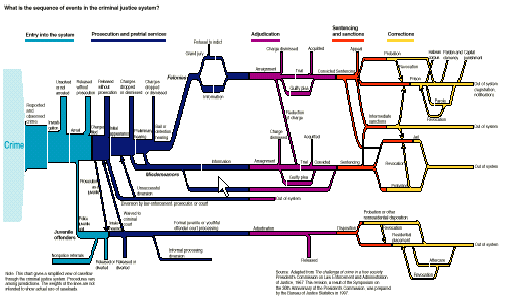
Criminal Justice Flowchart


"This flowchart of the events in the criminal justice system updates the original chart prepared by the President's Commission on Law Enforcement and the Administration of Justice in 1967. Accompanied by a clarifying text description, the chart summarizes the most common events in the criminal and juvenile justice systems including entry into the criminal justice system, prosecution and pretrial services, adjudication, sentencing and sanctions, and corrections.

Electronic files of both full color and black and white versions of the chart available for downloading [from the Bureau of Justice Statistics.]"

8/14/2006

When Squirrels Attack

"Several people attacked by a squirrel at Central Park said they had one word for the animal:

'Nuts.'"

Read more in thisLiveScience.com article

Risk is a Gift You Give Yourself

"'When in your life did you feel most alive?'...

I have asked hundreds of people the same question and have been struck by the similarity of their answers. In particular I've noticed 3 themes. (1) Nearly everyone describes a scenario in which they pushed themselves out of their comfort zone and took risks. (2) The OUTCOME of taking the risk is rarely the main thrust of the story - it's usually the process of taking them that they remember most fondly. (3) When people finish their story, they've often got a big smile on their face.

Consider This:

The gift of risk-taking doesn't lie in what you achieve by risking - it lies in who you become as a result of the process. Confident. Engaged. Alive..."

Read more in this Doug Sundheim post found via an Arnie Herz item.

Technorati Tags: , , , ,

Sounds of Silence

This struck me kinda funny, even though I recognize the value of quietude in meditation practice:

"These audio files consist of various lengths of silence..."

8/13/2006

Yiddish People

I am fascinated by the Yiddish language, particularly the way some words seem to actually embody what they describe. Consider the following list of Yiddish people. I am sure there are many more.

Baleboost - boss

Bulvan - cement head

Bubba-Myse - liar

Bubbe - grandmother

Bubeleh - (little grandmother) term of endearment

Gonif - thief, crook, swindler

Kaker - old fart

Kibbitzer - wise guy

Macher - a big wheel, the real deal, celebrity

Mamala - baby

Maven - expert

Mensch - a decent, upright, honorable person of good character

Meshuggeneh - crazy, obsessive person

Nebbish - a wimp, nerd, dork

Nudj - little pest

Nudnick - a pest and a bore

Putz - schmuck

Rabbi, Rebbe - teacher, spiritual leader

Shmuck - idiot

Shnook - unassertive patsy; gullible dummy

Shnorrer - a moocher, freeloader, cheapskate

Shmegegge - a no talent, someone who brings nothing to the party

Shlemiel - foolish person, hard-luck type, clumsy person

Shlimazl - unlucky person; born loser

Shlump - drip; party pooper

Shmo - jerk

Yenta - a meddlesome gossip

Zayde - grandfather

Technorati Tags: , , , ,

Life is More

I recently rediscovered notes I took from an article I read in 1997. These ideas still resonate with me and I thought I would share them. If you know the article where I originally found these words, please let me know so I may make proper attribution.

Life is more than a striving for money, power and position. There will never be enough money. Money does not bring satisfaction. Power is fleeting. Position is even less permanent.

Many lawyers are engaged in a frantic chase for the brass ring just out of reach, responding to the siren call of billable hours, revenues origination, selling their lives for money, one hour at a time.

The quality of a lawyer's life is an important element of law practice.

A complaint echoes throughout the land, "The practice of law is no longer a profession. It is a business."

The focus of our practice must be on service to our clients, with monetary reward a by-product of that service. We can not let money become the main goal with service the by-product.

Take responsibility for your present situation and your future. Do not blame others. Focus your efforts on those areas you can truly influence.

Double the time on the job you use your strengths and talents.

Develop a plan to solve a challenge or creating something of value that will be both beyond expectations and of major value to your organization. Clarify with the person to whom you report your mutual expectations of each other.

Double the time you spend listening to others.

Technorati Tags: , , , ,

8/09/2006

Dream the Possible Dream

"The secret to breaking out of the box is to dream. Don’t be afraid to dream. Don’t be ashamed. Don’t be held back by your own doubts. Don’t be held back by others’. Dream big and dream real. And then keep trying different methods to fulfill your dream."

So concludes this wonderful post by J. Timothy King citing the following passage from The Bear Necessities of Business: Building a Company with Heart by Maxine Clark, the founder of Build-A-Bear Workshop®:

People often ask how I was able to take the rough idea for Build-A-Bear Workshop and turn it into such a successful business. Above all, it started when I simply allowed myself to dream. And I’m a true believer in dreaming big.

Since the very beginning, I didn’t put restrictions on my vision, nor did I let the way others made or sold stuffed animals stand in my way. Instead, I allowed myself to dream of this unique business going from one store at the Saint Louis Galleria to something that could be as huge as I thought it could be. My dream eventually came true, and continues to evolve even beyond my wildest imagination. But you must start by believing you can truly achieve whatever you set your mind to, no matter how monumental it might seem.

Most people don’t do that. They stymie themselves and their ideas with negative thoughts. They’re so caught up in what they can’t do that they don’t think about how much they can accomplish. As Marianne Williamson wrote in Return to Love, “Our deepest fear is not that we are inadequate. Our deepest fear is that we are powerful beyond measure. It is our Light, not our Darkness, that most frightens us."

Technorati Tags: , , , ,